Blog Topics
Fall tree care isn’t about squeezing every possible treatment into the weeks before winter. It’s about figuring out what your trees actually need while there’s still time to address problems before freezing temperatures, snow, and ice arrive.
After a long growing season, trees throughout the Loveland-Milford corridor have already dealt with months of heat, storms, dry spells, and other stress. This is your opportunity to catch problems that developed over the summer, support stressed roots, and take care of the work that can help your trees head into dormancy in better condition.
Key Takeaways
- Fall is a good time to check for dead branches, cracks, root movement, and other damage before snow and ice add extra weight to the canopy.
- Test the soil before fertilizing so you can correct an actual nutrient or pH problem instead of applying fertilizer your trees may not need.
- Continue checking soil moisture through fall, especially around newly planted, drought-stressed, and evergreen trees, and water deeply when conditions are dry.
- Keep mulch about 2 to 3 inches deep and away from the trunk to protect the root zone without creating a mulch volcano.
- Use fall to identify pruning needs, but save routine structural pruning for dormancy when possible; dead, broken, or hazardous branches can be addressed sooner.
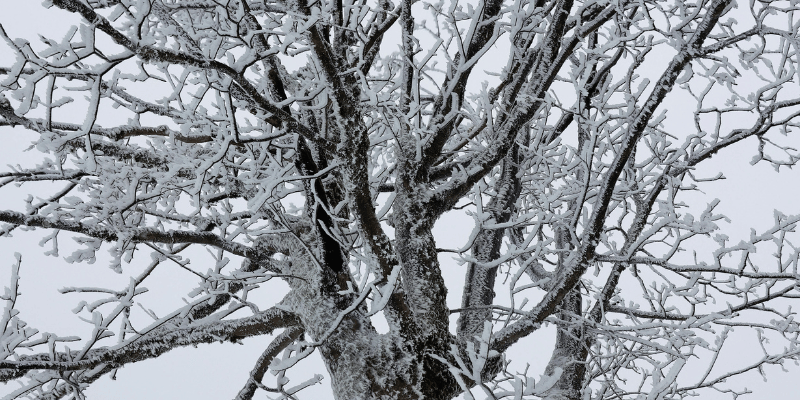
Snow and ice add weight to the canopy, putting more stress on branches and attachments that are already weak or damaged.
What Tree Care Should You Do in Cincinnati This Fall?
The work your trees need this fall is largely shaped by what happened during the growing season. Summer drought, storms, compacted soil, and damaged branches can all carry problems into the colder months if they aren’t addressed. These five steps focus on the areas worth checking before the season ends.
1. Check Trees for Damage Before Winter
Once leaves begin dropping, take a good look at the trunk and larger branches. A thinner canopy can reveal problems that were much harder to see during summer, including deadwood, cracks, damaged branch unions, and changes in the tree’s overall structure.
This is especially worth doing after a summer of thunderstorms or high winds. Damage doesn’t always result in an immediate branch failure. A limb can crack and remain in the canopy, or roots can shift without the tree falling right away.
What Tree Warning Signs Should You Look for Before Winter?
Pay closer attention if you notice:
- Large dead or hanging branches
- New cracks in the trunk or major limbs
- A lean that has recently appeared or become more pronounced
- Soil lifting or cracking around the base of the tree
- Mushrooms or fungal growth around the trunk or root flare
- Cavities, decay, or sections of missing bark
- Large branches with weak or damaged attachments
One of these signs doesn’t automatically mean the tree needs to come down. What matters is where the defect is located, how much of the tree is affected, and what could be damaged if that part of the tree failed. Depending on what’s found, the visit could lead to cabling and bracing to support a weak branch union or a split trunk worth saving, or hazard pruning to remove the specific limb causing concern without bringing the entire tree down.
If something on this list looks familiar, our guide to how to tell if a tree is dangerous explains what can make a warning sign more concerning and when it may point to a higher risk of failure.
2. Water Trees Until the Ground Freezes
Cooler weather doesn’t mean your trees are finished using water.
Roots continue functioning while the soil remains unfrozen, and trees that enter winter already short on moisture have fewer reserves to draw from. Evergreens are particularly important to watch because they continue losing moisture through their foliage during winter.
If Cincinnati gets regular fall rain, supplemental watering may not be necessary. During dry stretches, however, putting the hose away too early can leave trees heading into winter with dry soil around their roots.
How Often Should You Water Trees in the Fall?
Check the soil rather than watering on a fixed schedule.
If the soil several inches below the surface is dry, water slowly and deeply across the root zone. The goal is to wet the soil where the absorbing roots are located, not repeatedly soak the area immediately against the trunk.
A slow application also gives Cincinnati’s heavier soils time to absorb water instead of allowing it to run across the surface.
Which Trees Need the Most Water Before Winter?
Pay particular attention to:
- Trees planted within the last few years
- Trees that showed drought stress during summer
- Evergreens
- Trees growing in exposed or unusually dry locations
- Trees with disturbed or compacted root zones
Recently planted trees deserve extra attention because their root systems haven’t yet expanded far beyond the original planting area. They can dry out even when an established tree nearby is doing fine.
When Should You Stop Watering Trees in Cincinnati?
Continue monitoring soil moisture until the ground freezes.
You don’t need to water because the calendar says it’s fall, and you shouldn’t water already-saturated soil. Let actual rainfall and soil moisture determine when your trees need supplemental water.
3. Refresh Mulch Around the Root Zone
Mulch does more than make a landscape bed look finished. A proper layer helps the soil hold moisture, moderates temperature changes around roots, and reduces competition from turf.
Fall is a good time to check existing mulch because summer weather, mowing, foot traffic, and decomposition can leave the layer thinner or uneven by the end of the growing season.
Before adding more, see how much is already there. More mulch isn’t always better.
How Much Mulch Should You Put Around a Tree?
Aim for roughly 2 to 4 inches of mulch spread over as much of the root zone as the landscape allows.
Think wide rather than deep. Extending mulch farther from the trunk benefits more of the root system than piling another layer onto a small ring around the tree.
You also don’t need to remove perfectly good mulch every year. If enough remains, loosen compacted areas and add only what’s needed to restore the proper depth.
Should Mulch Touch the Tree Trunk?
No. Pull mulch back from the trunk so the root flare remains visible and dry.
The familiar “mulch volcano” traps moisture against bark that is supposed to remain exposed to air. Over time, that can contribute to bark deterioration, decay, girdling roots, and other problems around the base of the tree.
The finished bed should look more like a broad, shallow ring than a mound.
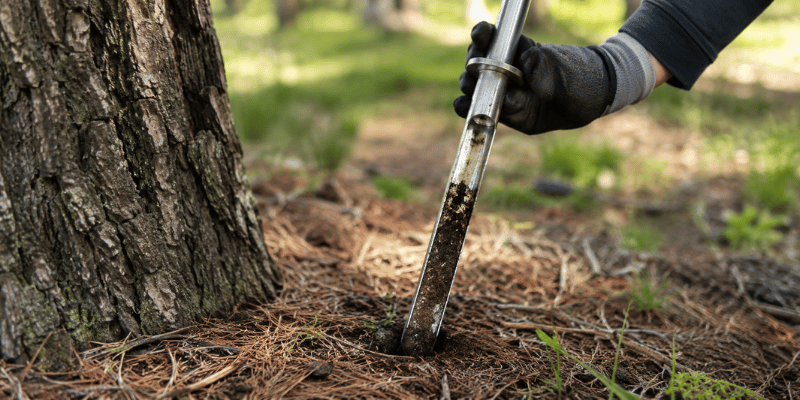
Soil testing can identify pH and nutrient issues before deciding whether a tree would benefit from fall fertilization.
4. Test Your Soil Before Fertilizing
Trees spend years growing in the same soil, and what’s happening below ground has a major influence on what you see above it. Compaction, poor drainage, nutrient deficiencies, and unsuitable soil pH can all interfere with root function.
That’s particularly relevant around the Loveland–Milford corridor, where soil conditions can change considerably from one property to another. Properties near the Little Miami River can have very different soil and drainage conditions from heavier upland soils elsewhere in Clermont, Hamilton, and Warren counties.
A soil test gives you something more useful than a calendar-based recommendation: information about what is actually happening in the root zone.
How Do You Know if a Tree Needs Fertilizer?
Yellowing leaves, reduced growth, or a thinning canopy can sometimes point to a nutrient problem, but those symptoms aren’t enough to diagnose one. Root damage, drought, compacted soil, poor drainage, insects, and disease can produce similar changes.
That’s why we don’t recommend fertilizing a stressed tree just because it looks like it needs a boost.
Testing the soil can identify nutrient deficiencies and pH issues and help determine whether fertilization is likely to benefit the tree. It can also prevent you from adding nutrients the soil already has. A soil test can identify nutrient deficiencies and pH issues and help determine whether fertilization is likely to benefit the tree.
Learn more about how Priority Tree approaches soil and root health as part of tree preservation.
What Type of Fertilizer Is Best for Trees in the Fall?
There isn’t one fall fertilizer that is best for every tree.
The right formulation depends on what the soil is lacking. Applying a high-nitrogen product when nitrogen isn’t deficient doesn’t solve the actual problem and can encourage growth you weren’t trying to promote.
For established landscape trees, fertilization should correct a documented need rather than become an automatic part of the fall checklist.
5. Schedule Pruning for the Right Time
Fall is a good time to identify pruning needs, but for many trees, the better time to make those cuts comes after the leaves have dropped and the tree is fully dormant. Without a full canopy in the way, the tree’s structure is easier to see, making it easier to identify crossing branches, weak attachments, competing leaders, and other growth that should be corrected.
Dormant pruning also avoids removing active foliage while the tree is still storing energy and preparing for winter. Dead, broken, or hazardous branches are an exception and should be addressed when they pose a risk, but routine structural pruning can often wait until dormancy.
Which Trees Benefit from Dormant Pruning?
Many deciduous shade trees common throughout Greater Cincinnati benefit from dormant pruning, including maples, oaks, beeches, and sycamores. Mature trees can be evaluated more clearly once their leaves are gone, while young trees can benefit from structural pruning that corrects competing leaders, poor branch spacing, and weak attachments before those problems become harder to manage.
The best pruning window can also vary by species, which is especially important for trees that are vulnerable to specific pests or diseases.
When Should You Prune Oak Trees in Cincinnati?
Oaks deserve more careful timing because pruning wounds can create an entry point for pests and pathogens. Ohio State University recommends avoiding wounds from April 15 through July 1, with April 15 through October 1 offering a more conservative window of protection.
Unless an oak has damaged or hazardous branches that need immediate attention, routine pruning is generally better planned during the dormant season. This reduces unnecessary exposure during periods when insects associated with oak diseases may be active.
If you have a mature tree that needs structural work or branches that are too large to safely handle from the ground, Priority Tree provides professional tree pruning and trimming throughout Greater Cincinnati.
Frequently Asked Questions About Fall Tree Care in Cincinnati
Should I remove fallen leaves from around my trees?
You don’t need to remove every fallen leaf. A light layer of healthy leaves can break down naturally and return organic matter to the soil. However, thick, matted leaves can smother turf, and leaves from trees affected by certain fungal diseases may need to be cleaned up to reduce infected material around the property.
Can I plant a new tree in the fall?
Yes. Fall can be an excellent time to plant trees in Cincinnati because cooler temperatures reduce heat stress while the soil is still warm enough to support root growth. Newly planted trees still need consistent watering until the ground freezes, especially during dry stretches.
Should I wrap my trees before winter?
Most established trees don’t need to be wrapped for winter. Trunk protection may be helpful for certain young or thin-barked trees or where deer and rodents are a concern. If you do use a guard or wrap, make sure it’s installed correctly and doesn’t trap moisture against the trunk.
Should I remove dead branches in the fall?
Yes. Dead, broken, or hanging branches can be removed in the fall, particularly when they could fall onto a house, driveway, sidewalk, or other frequently used area. Large branches or deadwood high in the canopy should be handled by a professional rather than attempted from a ladder.
Can cabling or bracing help a tree before winter?
Sometimes. Cabling and bracing can provide additional support for certain weak branch unions or limbs, but they aren’t appropriate for every tree with a structural problem. The location and severity of the defect, the tree’s overall condition, and what could be affected by a failure all need to be considered before installing a support system.
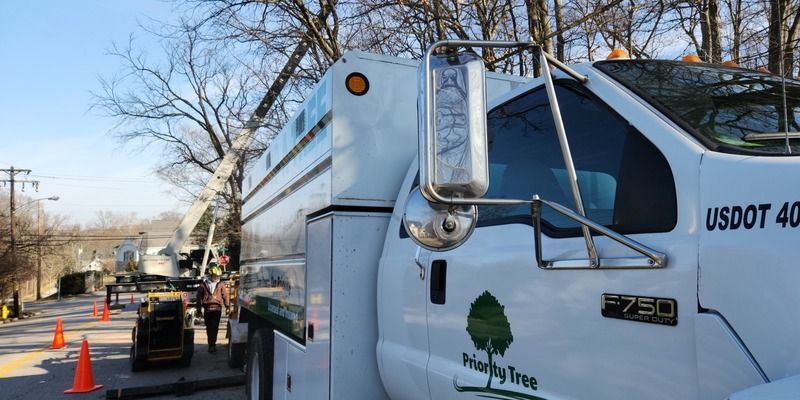
Priority Tree provides professional tree care throughout Milford, Loveland, and the Greater Cincinnati area.
Give Your Trees a Better Start Going Into Winter
A little attention in the fall can go a long way once winter weather sets in. Keep an eye on soil moisture, maintain a healthy mulch layer, and use leaf drop as an opportunity to get a better look at your trees. If you spot damaged branches, weak attachments, or other concerns, fall also gives you time to address them before snow and ice add more stress.
For pruning, structural concerns, or trees that need a closer look, Priority Tree helps homeowners throughout Milford, Loveland, and Greater Cincinnati make the right call for their trees. Call us today at 513-998-7136 or request an estimate online.
Andrew Wilson
Andrew is the owner of Priority Tree and an ISA Certified Arborist with years of residential, commercial, and disaster-response tree care experience. His background combines hands-on expertise with a strong focus on leadership, professionalism, and a commitment to quality and customer satisfaction.
Our Articles
What Are the Signs a Tree Is Dangerous in Cincinnati?
Andrew Wilson | July 30, 2026
Wondering if your tree is dangerous? Learn the most common warning signs, what they mean & when a tree should be inspected or removed to protect your property.
What Invasive Plants Are Taking Over Your Cincinnati Yard?
Andrew Wilson | July 30, 2026
Invasive plants taking over your Cincinnati property? Learn how to identify, why DIY cutting fails, and how professional removal stops them from coming back.
How to Get Rid of Tree Debris Without Hauling It Yourself
Andrew Wilson | July 30, 2026
Hauling brush and logs yourself costs more than you think. Here's what disposal rules actually allow around Cincinnati & when a grapple truck is the best call.