Blog Topics
A leaning trunk, thinning canopy, dead branches, or a crack between two large stems can make an older tree look concerning, but none of those signs automatically means the tree needs to come down. An on-site tree evaluation looks at the entire tree – from the roots and trunk to its branch structure and canopy – to understand what is happening and whether anything needs to be done.
That’s especially important with the mature trees found throughout Hyde Park and Oakley. One visible symptom rarely tells the whole story, and two trees that look similar from the ground can need very different care once they’re evaluated up close.
Here’s what our team looks at during an on-site evaluation, what those findings can tell us, and how we determine whether a tree should be treated, pruned, monitored, or removed.
Key Takeaways
- An on-site tree evaluation looks at the entire tree and its surroundings rather than making a recommendation based on one visible symptom.
- Structural problems, such as codominant stems or included bark, don’t automatically mean a tree needs to be removed; their severity and the tree’s overall condition determine what options are available.
- The pattern and extent of canopy dieback can help an arborist determine how far decline has progressed and whether root or growing-condition problems may be contributing.
- Root damage or decay becomes more concerning when it affects the tree’s structural support or appears alongside other signs of decline or instability.
- After the evaluation, the next step may be monitoring, pruning, preservation care, further investigation, or removal depending on what the arborist finds.
What Happens During a Tree Evaluation?
An on-site evaluation looks at the tree as a whole rather than making a recommendation based on one dead branch, a visible lean, or another symptom viewed from a distance.
We start by asking what you’ve noticed and whether anything has changed. A lean that’s been present for decades means something different from one that appeared after a storm, just as gradual canopy thinning tells us something different from a large section dying suddenly.
From there, we work from the ground up to inspect:
- Site and Growing Conditions: We look at the surrounding grade, drainage, soil conditions, nearby construction, pavement, retaining walls, and other changes that could affect the root system.
- Roots and Root Flare: We check where the trunk meets the ground for visible decay, fungal growth, damaged or girdling roots, abnormal movement, and changes in the surrounding soil.
- Trunk: We look for cavities, cracks, decay, old wounds, missing bark, and other defects that could affect the tree’s structure.
- Branch Attachments: Codominant stems, included bark, cracks, and unusually heavy limbs can tell us where the tree may have structural weaknesses.
- Canopy: We look at leaf density, deadwood, dieback patterns, broken limbs, and whether decline is concentrated in one area or occurring throughout the crown.
- Surroundings: A defect has different implications depending on what’s nearby. We consider the tree’s relationship to the home, driveway, street, neighboring property, and areas people regularly use.
The important part is how those observations fit together. A thinning canopy may lead us to look more closely at the roots, while movement in the soil around a leaning tree changes how we interpret that lean. Taken together, those findings help us determine whether the tree needs treatment or pruning, should be monitored for changes, or has problems serious enough to consider removal.
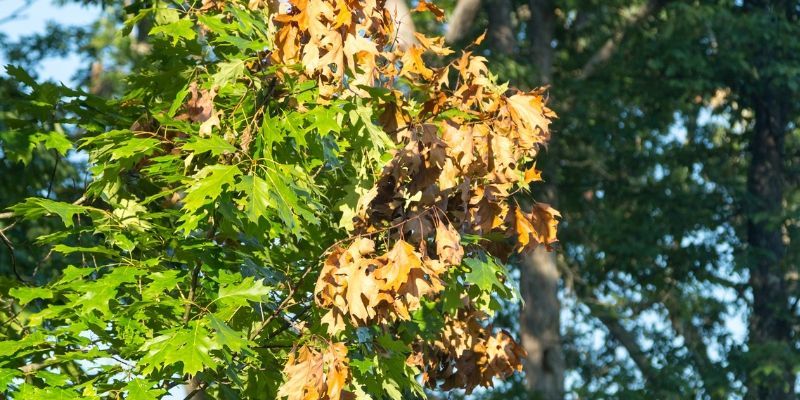
The pattern and extent of canopy dieback can help an arborist determine how far decline has progressed and where to investigate for an underlying cause.
How Does an Arborist Determine Whether a Tree Can Be Saved?
Whether a declining or structurally compromised tree can be saved depends on what’s causing the problem, how far it has progressed, and whether the condition can be corrected or managed. An arborist looks at the tree’s structure, roots, and canopy together to understand the extent of the problem rather than making a removal recommendation based on one visible symptom.
Some findings may point to a problem that can be addressed through pruning, improved growing conditions, or other preservation care. Others may show that the tree has lost too much structural integrity or root support for those options to be practical.
Can a Tree with Structural Problems Be Saved?
Codominant stems (when two stems of similar size share one union instead of one stem dominating) are weaker than a normal branch-to-trunk attachment. When bark gets trapped inside the union as it grows (included bark), the connection loses around 14% to 20% of its strength.
To determine whether a codominant union needs correction or just monitoring, there are two things to assess:
- Union Shape : A tight “V” union is the visual sign of included bark; a wide “U” union is the stronger, healthier form.
- Growth Stage : In younger trees, a V-shaped union can often be corrected with structural pruning instead of removal, which is why age matters as much as the shape itself.
A codominant union doesn’t automatically mean the tree needs to be removed. Depending on the tree’s age and the condition of the union, structural pruning may help correct or reduce the problem, while other trees may only need to be monitored for changes. Cracking, decay, or separation at the union can indicate a more serious structural problem and may limit the options for preserving the tree.
Can a Tree with Canopy Dieback Be Saved?
Canopy dieback doesn’t always mean a tree needs to be removed. The pattern and extent of the dieback help us understand how far the decline has progressed and whether the tree still has enough healthy growth to recover.
We pay particular attention to:
- How Much of the Canopy Is Affected: Isolated dead branches are different from decline affecting a large portion of the crown.
- Where the Dieback Is Occurring: Decline limited to one area may point to a localized problem, while dieback progressing from the outer branch tips inward can indicate a broader issue.
- Whether It’s Getting Worse: Expanding dieback or continued canopy loss can indicate that the underlying problem is still affecting the tree.
- How Much Healthy Growth Remains: Healthy foliage and new growth elsewhere in the canopy can help us gauge the tree’s remaining vitality and potential to respond to care.
Canopy dieback also gives us clues about where to investigate next. If the pattern suggests the tree is struggling below ground, the condition of the root system becomes an important part of determining whether preservation is still practical.
Can a Tree with Root Damage or Decay Be Saved?
Root damage or decay doesn’t automatically mean a tree needs to be removed, but the extent of the damage and how it affects the tree’s stability are important. Because much of the root system is underground, we look for visible clues around the root flare and surrounding soil, including:
- Fungal Growth: Conks or mushrooms at the base can indicate decay in the roots or lower trunk.
- Disturbed Soil: Newly lifted, cracked, or heaved soil can indicate movement in the root system.
- Soft or Decayed Wood: Wood that feels soft, spongy, or crumbles around the base can indicate decay.
We consider those findings alongside the tree’s canopy, structure, and growing conditions to determine how significant the root problem may be. Depending on what we find, the next step may be ongoing tree preservation services, monitoring, further evaluation, or removal.
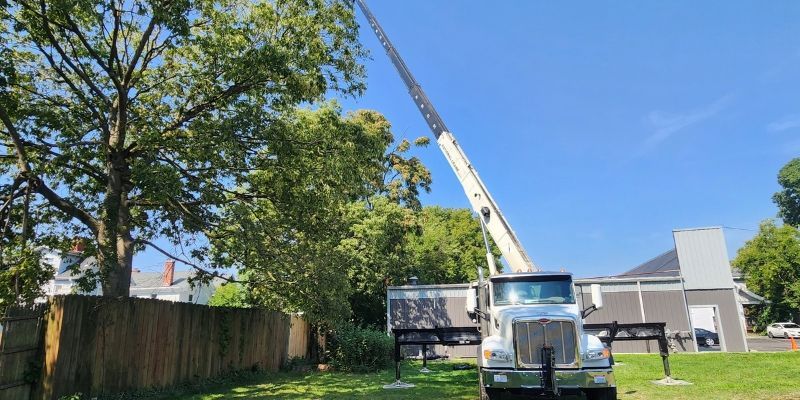
An on-site evaluation helps determine the appropriate next step for a tree, whether that means monitoring, preservation care, pruning, or removal.
What Happens After a Tree Evaluation?
After the evaluation, we’ll explain what we found, how significant those findings are, and what – if anything – we recommend doing next. Depending on the tree’s condition, the next step may include:
- No Immediate Work: Not every visible defect requires action. If the tree doesn’t need treatment or corrective work, we’ll tell you.
- Monitoring: Some conditions are better watched for changes over time rather than addressed immediately.
- Pruning: Dead, damaged, or poorly attached branches may be managed through pruning while preserving the rest of the tree.
- Tree Preservation Care: When the tree has a manageable health or growing-condition problem, tree preservation services may help address the underlying issue.
- Additional Evaluation: If we can’t determine the extent of a problem visually, further investigation may be appropriate before deciding what to do.
- Tree Removal: When the findings show that preserving or monitoring the tree is no longer a reasonable option, removal may be recommended.
When Removal Becomes Necessary
Tree removal becomes the next step when the problems found during the evaluation are significant enough that pruning, preservation care, or monitoring can’t reasonably address the concern.
That decision depends on the tree itself and what surrounds it. Conditions that may lead to a removal recommendation include:
- Significant Structural Weakness: Major cracks, advanced decay, failing unions, or other defects may leave an important part of the tree without adequate structural support.
- Loss of Root Support: Extensive root damage or decay can affect the tree’s ability to remain anchored, particularly when there are other signs of movement or instability.
- Advanced Decline: Extensive canopy loss combined with other signs of declining health can indicate that the tree has limited potential to recover.
- Consequences of Failure: The condition becomes more concerning when the affected tree or branch could reach a home, driveway, street, neighboring property, or another frequently used area.
Frequently Asked Questions About Tree Evaluations
How do I know if my tree is dying?
A thinning canopy, increasing deadwood, reduced leaf growth, bark loss, fungal growth, or changes around the roots can all indicate decline, but one symptom doesn’t necessarily mean the tree is dying. An on-site evaluation can help determine how extensive the decline is and what may be causing it.
Should I have an old tree evaluated even if nothing looks wrong?
Age alone isn’t necessarily a reason to be concerned about a tree. However, an evaluation can be worthwhile if the tree is large, close to your home or other frequently used areas, has a history of storm damage, or hasn’t been professionally evaluated in many years.
Can an arborist tell if a tree is dangerous just by looking at it?
A visual evaluation can identify many structural and health concerns, but not every problem is visible from the outside. If the extent of decay, root damage, or another condition can’t be determined during the visit, additional investigation or specialized testing may be recommended.
Does a leaning tree need to be removed?
Not necessarily. A tree that has grown at an angle for many years is different from a tree that has recently started leaning. An arborist will look at whether the lean is new, the condition of the roots and trunk, and whether there are signs of movement around the base before recommending what to do.
Is it worth getting a second opinion if another company already recommended tree removal?
Yes, a second opinion can be worthwhile when you haven’t been given a clear explanation of why the tree needs to be removed. Another on-site evaluation can help confirm the concerns, explain how significant they are, and determine whether removal is necessary or whether pruning, preservation care, or monitoring may still be reasonable options.
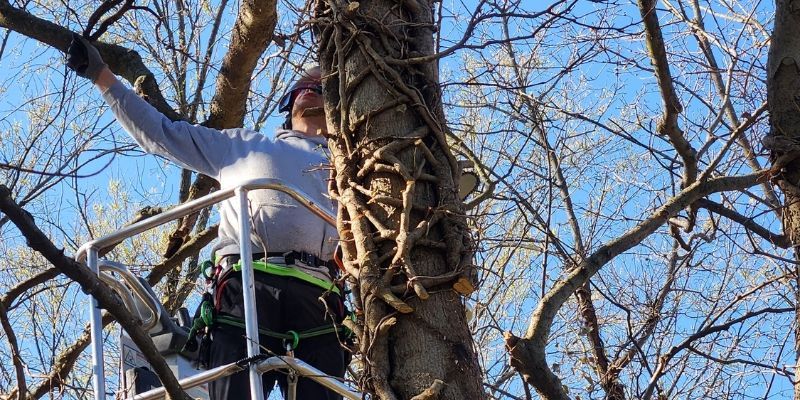
A closer inspection can help an arborist understand the extent of a tree’s structural or health concerns before recommending what should happen next.
Schedule a Tree Evaluation from the Trusted Team at Priority Tree
When you’re concerned about a mature tree, the next step shouldn’t be guessing whether it can stay or assuming it needs to come down. An on-site evaluation can help you understand what’s happening, how significant the problem is, and what options make sense for the tree and your property.
If you have an older tree in Hyde Park, Oakley, or the surrounding Cincinnati area that’s showing signs of decline, schedule an evaluation with Priority Tree today by calling 513-998-7136. We’ll take a closer look, explain what we find, and help you understand your options before you decide what comes next.
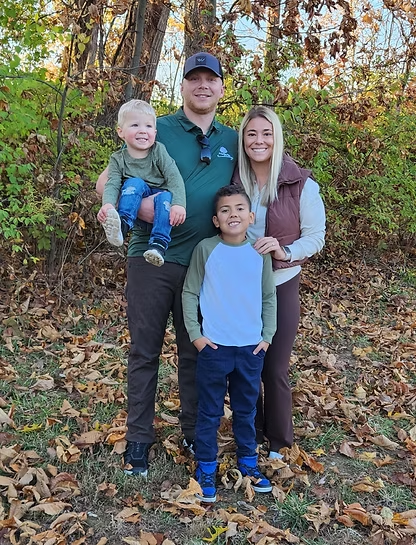
Andrew Wilson
Andrew is the owner of Priority Tree and an ISA Certified Arborist with years of residential, commercial, and disaster-response tree care experience. His background combines hands-on expertise with a strong focus on leadership, professionalism, and a commitment to quality and customer satisfaction.
Our Articles
Fall Tree Care in Cincinnati: 5 Things to Do Before Winter
Andrew Wilson | September 24, 2026
Get your Cincinnati trees ready for winter with practical fall tips for watering, mulching, soil care, pruning, and spotting damage before snow and ice.
What Does Tree Removal Look Like on a Hillside Property in Cincinnati?
Andrew Wilson | July 31, 2026
See what the tree removal process actually looks like on a sloped Cincinnati lot in Anderson Township and Mt. Washington, from crew arrival to final cleanup.
What Are the Signs a Tree Is Dangerous in Cincinnati?
Andrew Wilson | July 30, 2026
Wondering if your tree is dangerous? Learn the most common warning signs, what they mean & when a tree should be inspected or removed to protect your property.