Blog Topics
This year, heavy rain has increased demand for drainage, flooding, and erosion help in Clermont County, with over 80 direct-assistance visits completed thus far. Clearing a wooded lot near Milford or Loveland exposes bare soil and has homeowners asking: Do I need a permit to clear land in Ohio? There’s not a single yes-or-no answer.
Your city or township, Ohio EPA stormwater rules, and a seasonal bat-habitat window each apply in different ways. The recommended clearing season opens October 1st, and notices have lead times, so it’s best to start planning now.
Key Takeaways
- Owning a wooded lot does not exempt it from clearing rules, and no single permit covers every property.
- Call your city or township zoning office first, since local rules vary by jurisdiction.
- Clearing one acre or more generally needs Ohio EPA stormwater coverage, filed at least 21 days before work starts.
- October 1st through March 31st is the recommended tree-clearing season for bat habitat, and projects with federal funding or permits typically follow it or complete a bat survey first.
- Start several weeks before crews are due on site, since the stormwater notice and some city permits need advance filing.
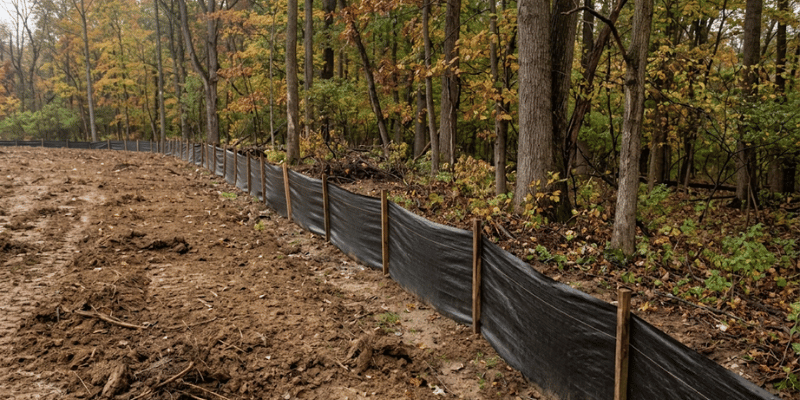
Silt fence and other erosion controls keep sediment from washing into streams and storm drains after clearing.
Do I Need a Permit to Clear Land in Clermont County?
It depends on your lot’s jurisdiction and how much ground you disturb. Milford and Loveland are cities, while nearby areas like Miami Township are unincorporated townships. Local rules differ from lot to lot, so work through the following:
- Zoning Office : Ask whether you need approval to clear trees on your parcel.
- Permit Central : Ask Clermont County Permit Central whether the county requires anything beyond zoning approval.
- County Sediment Rules : Clermont’s water management and sediment control regulations cover non-farm earth-disturbing work, so ask whether they apply to your lot.
- Local Variation : Euclid requires a permit to clear more than 500 square feet of vacant land, while Avon exempts single-family owners clearing their own parcel, and neither is a Clermont County rule.
When Does Ohio EPA Stormwater Coverage Apply?
Ohio EPA stormwater coverage applies statewide, with the trigger based on how much ground is disturbed. Sediment from cleared ground can wash into streams and storm drains, so the permit controls that runoff. The requirements come down to things like:
- Trigger : Clearing that disturbs one acre or more generally needs coverage under the construction stormwater general permit.
- Filing : You request coverage by filing a Notice of Intent at least 21 days before construction starts.
- Local Tie-In : Some municipal clearing permits link to this requirement and carry erosion controls such as silt fence as standard conditions.
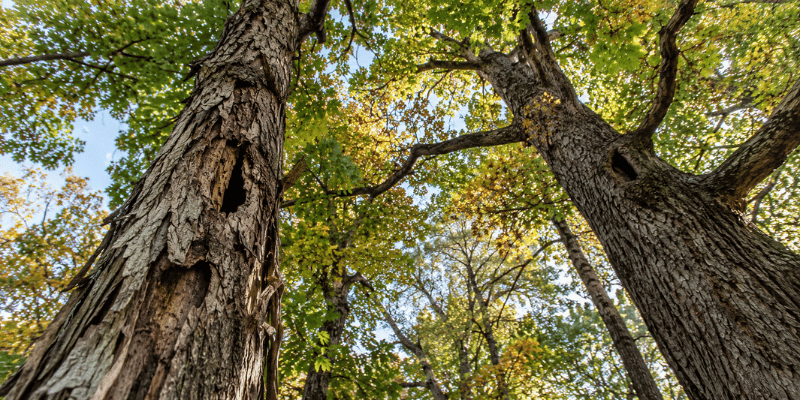
Indiana and northern long-eared bats roost in trees during warmer months, which is why the October to March clearing window matters.
When Can You Clear Trees in Ohio?
The recommended clearing season is October 1st to March 31st, and it’s required for projects with federal permits or funding. For private lots, it’s strong guidance that’s backed by endangered species liability.
What the Seasonal Window Protects
The window is meant to protect Indiana bats and northern long-eared bats, which live throughout Ohio wherever suitable habitat exists. Both roost in trees during the warmer months and hibernate in caves and mines in winter, so cutting between October and March avoids occupied roost trees. The risk of cutting outside the window can be explained by two points:
- Federal Status : The northern long-eared bat was reclassified as endangered effective March 31, 2023.
- Legal Exposure : Cutting a tree that holds roosting bats can kill or injure them, and the Endangered Species Act prohibits that.
What Else Should You Check Before Clearing a Wooded Lot?
There are other factors you can check that can change or completely stop a clearing project, even after local zoning and Ohio EPA are settled. Clermont County requires approval for work in special flood hazard areas, and Permit Central posts the floodplain maps so you can check your lot. Look into the following before you schedule any crew:
- Wetlands and Streams : Low ground and areas along the Ohio River corridor may require additional review.
- HOA Covenants : Many associations regulate tree removal, so read yours before scheduling.
- Underground Utilities : Electric and gas lines can run beneath ground you plan to clear or grade, so have them located before digging.
How Far in Advance Should You Plan a Clearing Project?
You should start planning a clearing project a few weeks before you want crews on site, since the stormwater notice and some municipal permits require advance filing. It’s possible for a project that starts October 1st to be done by March 31st, but each week spent on paperwork eats away at the clearing window. An ISA Certified Arborist at Priority Tree walks the lot, confirms the scope, and any permit answers you already have to plan around local restrictions.
Gather these items before an arborist comes out:
- Survey or Plat : It shows property lines and helps the arborist confirm what is inside your boundary.
- Acreage Estimate : It shows whether you are near the one-acre stormwater trigger.
- Trees to Keep : Flagged or listed trees let the estimate account for what stays standing, and you can raise tree preservation during the visit.
- Water Features : Notes on wetlands or streams let the arborist flag review issues early.
Frequently Asked Questions About Land Clearing Projects
Can a project under one acre still need Ohio EPA stormwater coverage?
Yes, if it is part of a larger plan of development or sale. If your lot is part of one, confirm with Ohio EPA or your zoning office before you start.
Which agencies regulate work in a stream or wetland?
The U.S. Army Corps of Engineers can require approval for work in streams and wetlands. Filling regulated waters may also need an Ohio EPA water quality certification or isolated wetland permit.
Can land be cleared in summer after a bat survey?
Sometimes, but it is a project-level process. In Ohio, summer mist-net surveys may run only from June 1 to August 15, and approval isn’t guaranteed near known hibernacula (winter bat roosts) or past capture records.
Do I need my neighbor’s permission to remove a boundary tree?
Generally, yes, because boundary trees are jointly owned and both owners must agree. Ohio’s reckless destruction law can bring misdemeanor charges or a civil negligence suit. That law mostly applies to rural boundaries, so city or village rules may differ.
Can I burn brush after clearing land?
It depends on your jurisdiction, and in Miami Township burning is rarely an option because the fire must be at least 1,000 feet from buildings on other properties and needs approval from the Southwest Ohio Air Quality Agency and the township fire department. State law also bans daytime open burning in unincorporated areas in March, April, May, October, and November, and restricted areas include land within 1,000 feet of Milford and 1 mile of Loveland.
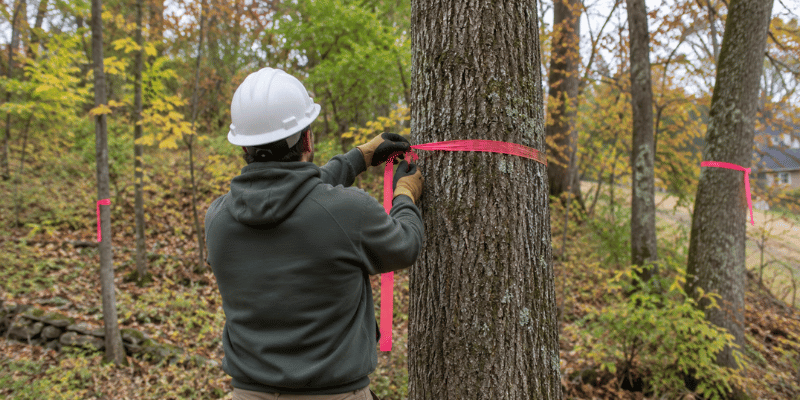
Marking the trees you want to keep before the estimate helps the arborist plan around what stays standing.
Schedule Your Land Clearing Project With Priority Tree
Permit calls and the estimate can happen at the same time, and Priority Tree can help with local permit applications. To move forward with your land clearing project, request an estimate online today.
Andrew Wilson
Andrew is the owner of Priority Tree and an ISA Certified Arborist with years of residential, commercial, and disaster-response tree care experience. His background combines hands-on expertise with a strong focus on leadership, professionalism, and a commitment to quality and customer satisfaction.
Our Articles

Fall Tree Care in Cincinnati: 5 Things to Do Before Winter
Andrew Wilson | September 24, 2026
Get your Cincinnati trees ready for winter with practical fall tips for watering, mulching, soil care, pruning, and spotting damage before snow and ice.

What Does an Arborist Look for During a Tree Evaluation in Cincinnati?
Andrew Wilson | August 21, 2026
A declining tree doesn’t always need to come down. Learn what a Cincinnati tree evaluation checks and how an arborist determines what should happen next.

What Does Tree Removal Look Like on a Hillside Property in Cincinnati?
Andrew Wilson | July 31, 2026
See what the tree removal process actually looks like on a sloped Cincinnati lot in Anderson Township and Mt. Washington, from crew arrival to final cleanup.