Blog Topics
Hillside properties are a familiar part of Cincinnati’s landscape, especially in areas like Anderson Township and Mt. Washington. In fact, Anderson Township maps hillside areas with slopes ranging from 20% to 30% or more, which can create some unique challenges when a tree needs to come down.
On a steep or wooded lot, crews may have fewer options for positioning equipment, setting rigging lines, and safely lowering branches and trunk sections. That means the tree removal process can look quite different from what you’d see on a flat, open property. Here’s what Cincinnati homeowners can expect when removing a tree from a hillside lot, from the initial assessment and equipment setup to rigging, removal, and cleanup.
Key Takeaways
- Hillside tree removal requires additional planning for equipment access, controlled removal, ground conditions, and debris handling.
- Trees on steep or tight lots are often dismantled in sections so the crew can control how and where each piece reaches the ground.
- Logs and brush may need to be moved from the hillside to an accessible collection point before a grapple truck can load and haul them away.
- Some lawn or ground disturbance is possible, but crews plan the job to minimize avoidable impact to the property.
- Many single-tree removals are completed in one day, although slope, access, and the complexity of the removal can add time.
What Happens on Tree Removal Day?
On removal day, our crew sets up the work area and equipment, takes the tree down using the method planned for your property, processes the wood and brush, and cleans up before we leave.
We start by reviewing the removal plan and taking another look at the property. We considered the slope, access, tree location, and nearby structures when preparing your estimate, but we still confirm conditions before work begins.
Then, we position our equipment and establish the work area. On a hillside property, we’re looking at more than where the tree will come down. We also need a safe, efficient route for getting the wood and brush back to the truck.
Before removal begins, we’ll have a plan for:
- Where trucks and equipment can safely operate
- How we’ll access the tree
- Where branches and trunk sections can come down
- How we’ll protect nearby structures and landscaping
- How we’ll move the wood and brush back to the truck
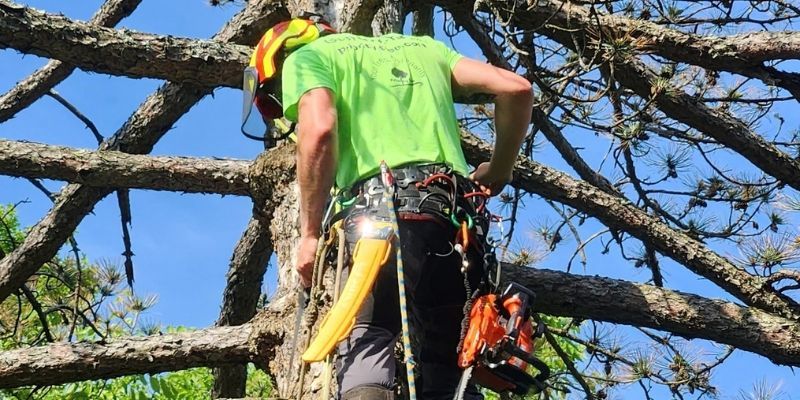
A climber can dismantle a tree in controlled sections when limited access or surrounding obstacles make felling the entire tree impractical.
Will We Fell the Tree or Take It Down in Sections?
Whether we fell the tree or dismantle it in sections depends on the available space, slope, access, and what’s around the tree.
If there’s enough open space, we may be able to fell the entire tree in a planned direction. On tighter hillside lots, we’ll typically dismantle it from the top down using a climber or aerial lift.
As we work through the tree, we can drop sections into a clear area or use ropes and rigging when they need to be lowered with more control. We also account for the slope when determining the size and landing point of each piece. A log or heavy branch that stays where it lands on level ground may roll, slide, or bounce once it hits a slope.
How Do We Keep the Work Zone Safe on a Hillside?
A hillside changes the work zone because we have to account for both where material will land and where it could travel after it reaches the ground.
We establish boundaries around the active work area and adjust them as the removal progresses. Crew members stay out of the path of falling or moving material, and the climber or lift operator stays in communication with the ground crew before sections come down.
We’ll also let you know which areas of the property need to remain clear. Children and pets should stay inside or well outside the designated work area until the crew lets you know it’s safe to return.
What Happens After the Tree Comes Down?
Getting the tree on the ground doesn’t mean the job is finished. We still need to process the material, remove it from the property, and complete any stump work included in your estimate.
That typically includes:
- Cutting larger trunk sections into manageable sizes
- Moving logs and brush to an accessible collection point
- Loading and hauling away the included debris
- Grinding the stump, if included and accessible
- Cleaning the work area and completing a final walkthrough
Stump access is something we consider when planning the removal. Our stump grinder is smaller than our trucks, but steep grades, retaining walls, stairs, and narrow gates can still limit where it can safely operate.
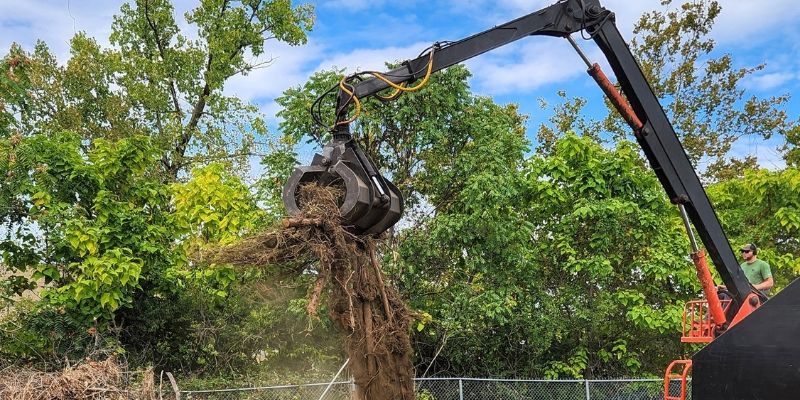
After logs and brush are moved to an accessible collection point, a grapple truck loads the debris for hauling.
How Do We Get Logs and Branches Off a Hillside?
Once sections reach the ground, our ground crew begins moving them out of the work area. Brush and smaller limbs can typically be carried or dragged to a collection point, while heavier logs may be cut into shorter lengths so they can be moved safely.
When the terrain allows, we can use equipment to move heavier material. On steeper areas where equipment can’t operate safely, more of that work has to be done by the ground crew.
Once the material reaches an accessible collection point, our grapple truck picks up the logs and brush for hauling.
Will Tree Removal Damage My Lawn or Hillside?
We take care to minimize the impact of tree removal on your property, but it’s possible to see some temporary disturbance afterward, particularly on a steep lot.
Minor effects may include flattened grass, small divots where heavy sections landed, disturbed mulch, or worn areas where the crew traveled repeatedly. If the ground is wet or soft, there’s also a greater chance of ruts or exposed soil.
That doesn’t mean significant property damage should be expected. Protecting the surrounding property is part of the job, and we’ll take reasonable precautions based on the terrain and conditions we’re working with.
If we see a higher risk of unavoidable lawn or ground disturbance before work begins, we’ll point it out so you know what to expect rather than discovering it after the removal is finished.
How Long Does Hillside Tree Removal Take?
Many single-tree removals can be completed in one day, but hillside access can add time to the job.
The biggest factors are the tree’s size, the steepness of the property, whether rigging is required, where equipment can be positioned, and how far the crew has to move material to reach the truck.
We’ll account for those conditions when planning your removal so you have a better idea of what to expect before the crew arrives.
Frequently Asked Questions About Tree Removal
Do I need to be home during tree removal?
You typically don’t need to stay home for the entire removal as long as the crew has access to the property and any questions about the work have been addressed beforehand. We’ll let you know during scheduling if there’s a reason we need you to be available.
Does a steep lot make tree removal more expensive?
It can. A steep slope may require additional rigging, more manual handling of logs and brush, different equipment, or more time to complete the removal. We account for those conditions when evaluating the property and preparing your estimate, so the price reflects how the tree can actually be removed.
What happens if equipment can’t reach the tree?
We don’t need to drive heavy equipment directly to every tree we remove. Depending on the property, a climber or aerial lift can be used to dismantle the tree, and our ground crew can move the resulting wood and brush to an accessible collection point.
Do I need a permit to remove a tree in Anderson Township?
In most cases, you don’t need a permit to remove a tree from your own residential property in Anderson Township. The township does regulate trees on public property and in the public right-of-way, and additional restrictions may apply to trees within protected or specially regulated areas.
If there’s any question about where the tree sits or whether restrictions apply to your property, we’ll address that before removal rather than leaving you to figure it out on your own.
Can I keep some of the wood?
Mention it before cutting starts, since grapple trucks load continuously and a request made mid-job is hard to accommodate.
Do I need to notify my neighbors before tree removal?
It’s not required, but it’s a good idea, especially if the drop zone, equipment access, or debris hauling could affect a shared property line.
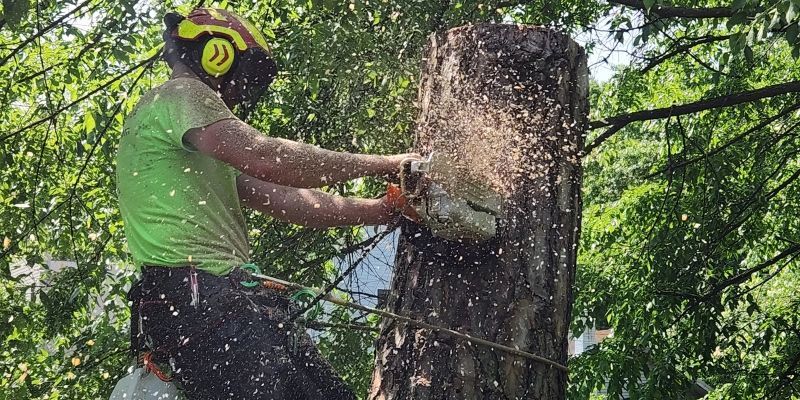
Large trees can be dismantled from the top down, with trunk sections cut to sizes the ground crew can safely manage.
Schedule Your Hillside Tree Removal Today with Priority Tree
A steep or difficult-to-access property leaves less margin for error, which is why careful planning matters just as much as the removal itself. An experienced crew knows what needs to be accounted for before work begins and how to adapt to the conditions of the property.
Priority Tree provides professional tree removal throughout Anderson Township, Mt. Washington, and the Cincinnati area, including the sloped and wooded properties common throughout these communities.
If you have a tree on a hillside or hard-to-access part of your property, request an on-site estimate. We’ll assess the site, explain how we’d approach the removal, and make sure you know what to expect before work begins.
Andrew Wilson
Andrew is the owner of Priority Tree and an ISA Certified Arborist with years of residential, commercial, and disaster-response tree care experience. His background combines hands-on expertise with a strong focus on leadership, professionalism, and a commitment to quality and customer satisfaction.
Our Articles
Fall Tree Care in Cincinnati: 5 Things to Do Before Winter
Andrew Wilson | September 24, 2026
Get your Cincinnati trees ready for winter with practical fall tips for watering, mulching, soil care, pruning, and spotting damage before snow and ice.
What Does an Arborist Look for During a Tree Evaluation in Cincinnati?
Andrew Wilson | August 21, 2026
A declining tree doesn’t always need to come down. Learn what a Cincinnati tree evaluation checks and how an arborist determines what should happen next.
What Are the Signs a Tree Is Dangerous in Cincinnati?
Andrew Wilson | July 30, 2026
Wondering if your tree is dangerous? Learn the most common warning signs, what they mean & when a tree should be inspected or removed to protect your property.