Blog Topics
You finally cut down the honeysuckle choking your oak tree. The vines are gone, the brush is hauled away, and your yard looks clean again. Then, just a few months later, dozens of new shoots erupt from the ground. Instead of solving the problem, it somehow got worse.
Invasive plants are a persistent challenge for Cincinnati homeowners. Cutting alone rarely works because these plants have evolved powerful regeneration strategies that most DIY removal attempts don’t address. Understanding how invasive plants spread and what actually stops them is the key to long-term control.
Key Takeaways
- Honeysuckle is Cincinnati’s most common invasive plant, spreading aggressively through bird-dispersed seeds and persistent root systems.
- Most invasive plants regrow after cutting because the root system survives; cutting removes only the visible plant.
- DIY removal often makes invasive problems worse by leaving root fragments that regenerate into denser infestations.
- Professional removal includes follow-up visits over 2–3 years because long-term management, not quick eradication, is the realistic goal.
- Some invasive species, like poison hemlock, require professional handling due to serious toxicity risks.

Several of Cincinnati’s most common invasive plants, including honeysuckle, English ivy, and Tree of Heaven, can quickly overtake landscapes and threaten tree health.
Why Are Invasive Plants More Than a Nuisance?
Invasive plants actively damage both your landscape and the surrounding ecosystem. They’re not just eyesores taking up space. They create real problems for homeowners who care about their landscape.
Invasive species crowd out native plants that support wildlife and stabilize soil. Vines strangle trees by wrapping around trunks and limbs, cutting off water and nutrients. Some species, like tree of heaven, release chemicals that inhibit nearby plant growth, while others, like poison hemlock, are toxic to handle. Removing invasive plants early is one of the best ways to preserve the long-term health of your trees.
Over time, unchecked infestations reduce property value and increase maintenance costs. The problem compounds year after year without consistent intervention. For Cincinnati homeowners, this becomes a landscape-wide issue that one removal attempt alone cannot solve.
What Are the Most Common Invasive Plants in Greater Cincinnati?
Greater Cincinnati is home to dozens of invasive plants, but a handful account for most of the problems homeowners face. Honeysuckle is by far the most widespread, though species like wintercreeper, tree-of-heaven, garlic mustard, and Japanese knotweed also spread aggressively and displace native plants.
Honeysuckle
Honeysuckle is the most commonly cited invasive plant among Greater Cincinnati homeowners. It’s a dense, multi-stemmed shrub growing 6 to 15 feet tall and can climb trees as a vine. In spring, it produces white-to-pink fragrant flowers. By fall, it bears bright red berries that persist into winter.
Birds eat the berries and spread seeds everywhere. Once established, honeysuckle creates dense thickets that crowd out spring wildflowers and native plants. The plant leafs out very early in spring, shading out native plants before they can grow. This aggressive habit is why it dominates Cincinnati properties so quickly.
English Ivy
English ivy is a climbing vine with heart-shaped leaves and small greenish flowers. It strangles trees by covering the canopy, blocking sunlight. Unlike honeysuckle, English ivy regenerates from root fragments, so a single small piece left in the soil can regrow into a new vine. This is why incomplete DIY attempts almost always lead to regrowth.
Bradford Pear and Callery Pear Family
Bradford, Cleveland, and Aristocrat pears are ornamental varieties of the Callery pear. Their white spring blooms make them popular landscape trees, but their narrow branch crotch angles create weak structure. As they mature, branches frequently split or break during storms, often leading to costly cleanup and tree removal.
They cross-pollinate with wild Callery pear varieties, creating thorny thickets that spread across properties. As of January 2023, Ohio made it illegal to plant new Callery pear trees due to the ecological damage they cause.
Tree of Heaven
Tree of Heaven is a tall tree (50–80 feet) with gray-to-black bark and compound leaves containing 11–41 leaflets. Young trees are often confused with native sumac, which makes identification tricky.
Tree of Heaven poses a serious problem because it produces chemicals that inhibit nearby plant growth. It spreads aggressively through root suckers and seeds, and partial removal is ineffective because of its persistent root system.
Autumn Olive
Autumn olive is a thorny shrub with pale, fragrant flowers and red berries. It’s more common in outer and rural service areas around Cincinnati. The plant out-competes native species and changes soil conditions, making it harder for native plants to thrive. Its thorns make removal difficult and risky.
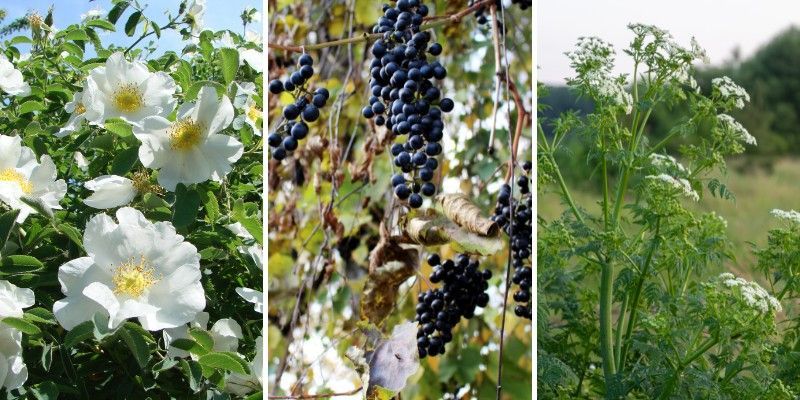
Multiflora rose, wild grape vine, and poison hemlock are common invasive plants in the Cincinnati area. While vines and shrubs can damage trees, poison hemlock poses an additional safety risk because it is highly toxic.
Multiflora Rose
Multiflora rose forms impenetrable thickets of thorny stems with small white flowers and red berries. It’s extremely hardy and spreads via both seeds and vegetative growth. The thorns create a serious hazard during removal that makes the plant dangerous to handle and difficult to eliminate.
Grape Vines
Common local problem vines include wild grape and porcelain berry. Both have woody stems with heart-shaped leaves and attach to trees via tendrils. They strangle trees, smother the canopy, and prevent sunlight from reaching the forest floor. If left unchecked, a single vine can eventually kill the host tree.
Poison Hemlock
Poison hemlock is a biennial herb that grows 4 to 8 feet or taller, with distinctive purple-blotched stems and fern-like leaves. All parts of the plant are highly toxic, and skin contact with the sap can cause irritation in some people. Ingestion can be life-threatening. Poison hemlock is common on Ohio roadsides and is extremely difficult to eradicate.
Unlike the other invasives on this list, poison hemlock should always be professionally removed. DIY removal carries serious health risks.
Euonymus
Euonymus comes in two forms, winged euonymus (a shrub) and wintercreeper (a vine). Both spread via seeds and vegetative growth and have persistent root systems. Like many invasives, incomplete removal leads to regrowth.
Why Is Honeysuckle Cincinnati’s Biggest Invasive Plant Problem?
Most Greater Cincinnati homeowners report the same frustrating pattern of initial removal followed by vigorous regrowth within months. Honeysuckle has an extensive root system that persists in the soil long after the visible plant is cut.
Cutting honeysuckle removes only the visible growth. Its extensive root system survives underground and quickly sends up new shoots. Without treating the roots, cutting provides only temporary relief.
Honeysuckle requires consistent, multi-year management before visible progress appears. This is not homeowner failure. It’s a biological reality. The plant evolved to persist and regenerate. DIY attempts fail not because of lack of effort but because the approach of cutting alone leaves the mechanism of regrowth (the root system) untouched.
Why Do These Plants Keep Coming Back After You Remove Them?
Most invasive plants are built to survive removal. Simply cutting or pulling the visible growth rarely eliminates the problem because the plant continues growing underground.
Invasive plants have aggressive regeneration strategies:
- Deep root systems
- Rhizomes (underground stems)
- Persistent seed banks
- Ability to regrow from small root or stem fragments
Cutting down the plant removes only the visible growth. The remaining roots quickly produce new shoots, often creating denser growth than before.
Complete eradication is rarely possible. Instead, successful invasive plant control focuses on long-term management through targeted root treatment, proper disposal of plant material, and multiple follow-up visits over 2 to 3 years. This approach reduces infestations, gives native plants a chance to recover, and helps prevent reinvasion.
DIY removal often falls short because it leaves roots behind, spreads seeds through improper disposal, or misses the best treatment timing, allowing the infestation to return.
What Does Professional Invasive Removal Actually Involve?
Professional invasive removal is a management plan, not a single visit. Here’s what the process looks like:
- Assessment: The professional identifies the species, estimates the spread, and plans the right approach. Different species require different treatment strategies.
- Mechanical Removal: The professional cuts or pulls invasive plants and removes as much above-ground biomass as safely possible. Specialized equipment, like forestry mulchers, may be used for larger infestations.
- Stump and Root Treatment: This is the critical step most DIY attempts skip. Herbicide is applied immediately to cut surfaces, allowing it to move into the root system. Proper timing and application are essential. This is what prevents regrowth and kills the roots rather than just the visible plant.
- Proper Disposal: Seeded material (berries, seed pods) cannot be composted because composting temperatures don’t reliably kill invasive seeds. Seeded material is bagged or burned on-site. Root fragments are disposed of properly to prevent regeneration.
- Follow-Up Visits. The professional returns 2 to 4 times over 2 to 3 years to address regrowth, prevent seed establishment, and monitor for reinvasion. These follow-up visits aren’t a sign the treatment failed. They’re an essential part of successfully managing invasive plants.
This approach works because correct species identification prevents the wrong treatment, and proper herbicide timing maximizes effectiveness. Realistic ongoing expectations are set upfront so there’s no surprise when regrowth requires follow-up. Proper disposal prevents seeds from spreading to new areas.
When to Call a Professional Arborist
Some invasive plants can be managed on your own, but others quickly become too hazardous, too extensive, or too difficult to remove effectively. Consider calling a professional arborist if:
- You’re dealing with poison hemlock. Poison hemlock is automatic professional territory. All parts cause burns on skin contact.
- The infestation covers a large area. If invasive plants occupy roughly half your property or more, a professional can assess the scope of the problem and recommend the most effective approach. For heavily overgrown properties, lot and land clearing can efficiently remove dense brush and invasive vegetation while preserving desirable trees whenever practical.
- Trees are involved. When invasive vines or shrubs are growing on or around valuable trees, improper removal can damage the tree you’re trying to protect. In some cases, an arborist may determine that tree removal is the safest solution if the tree has already been severely compromised.
- DIY removal hasn’t worked. Persistent regrowth usually means the root system or seed bank wasn’t fully addressed and requires a different treatment strategy.
- The plants are dense or thorny. Mature honeysuckle, multiflora rose, and similar species often require specialized equipment and protective gear for safe removal.
Frequently Asked Questions About Invasive Plants
How long does it take to get honeysuckle under control?
Most honeysuckle infestations require 3 or more years of consistent management before significant eradication. After initial removal, follow-up visits address regrowth and prevent reinvasion. The goal is reducing infestation density, so native plants can recover.
What’s the best time of year to remove invasive plants in Cincinnati?
Fall and early spring offer the best visibility for removal work. Fall maximizes herbicide effectiveness because plants are actively growing and absorb treatment faster. Spring is optimal for poison hemlock and vine removal specifically because they’re beginning their growth cycle. Timing depends on the species, so professional assessment determines the best window for your property.
Can I remove invasive plants myself?
Small seedlings and young plants can often be hand-pulled if you remove the entire root system. Established shrubs and trees are harder to control because many can resprout from roots or stumps. For larger plants or dense infestations, professional removal and follow-up treatment can help prevent regrowth.
What invasive plant regrows the fastest after cutting?
Tree of heaven and multiflora rose regrow fastest due to aggressive root sucker production and seed persistence. Honeysuckle also resprouts vigorously from root systems. DIY single-pass removal almost guarantees reinfestation within months.
Is professional removal of invasive plants worth the cost?
In many cases, yes. Most homeowners spend more through repeated failed DIY attempts than on professional removal that actually resolves the problem long-term.
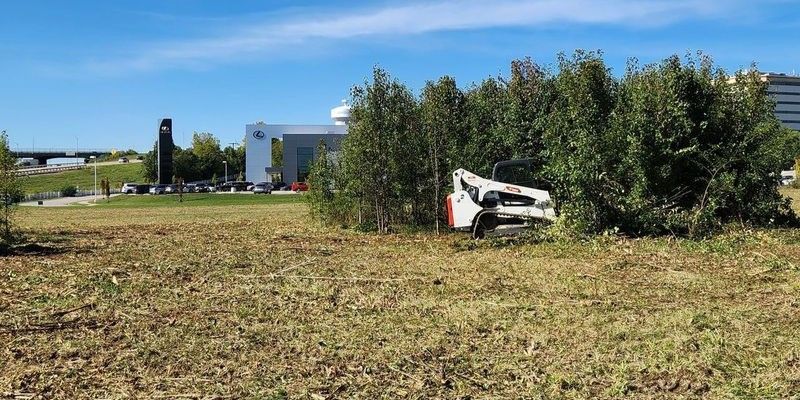
For large infestations, forestry mulching can efficiently remove dense invasive brush and small trees, making follow-up treatment more effective.
Stop Fighting the Same Invasive Plants Every Year—Call Priority Tree
Invasive plants aren’t one-weekend projects. Successful control requires a long-term management plan. If you’ve already tried DIY removal, have a large infestation, or suspect poison hemlock, a professional assessment can identify the right treatment strategy and set realistic expectations.
Ready to reclaim your landscape? Call Priority Tree at 513-998-7136 or schedule a free estimate for your Cincinnati property.
Andrew Wilson
Andrew is the owner of Priority Tree and an ISA Certified Arborist with years of residential, commercial, and disaster-response tree care experience. His background combines hands-on expertise with a strong focus on leadership, professionalism, and a commitment to quality and customer satisfaction.
Our Articles
Fall Tree Care in Cincinnati: 5 Things to Do Before Winter
Andrew Wilson | September 24, 2026
Get your Cincinnati trees ready for winter with practical fall tips for watering, mulching, soil care, pruning, and spotting damage before snow and ice.
What Does an Arborist Look for During a Tree Evaluation in Cincinnati?
Andrew Wilson | August 21, 2026
A declining tree doesn’t always need to come down. Learn what a Cincinnati tree evaluation checks and how an arborist determines what should happen next.
What Does Tree Removal Look Like on a Hillside Property in Cincinnati?
Andrew Wilson | July 31, 2026
See what the tree removal process actually looks like on a sloped Cincinnati lot in Anderson Township and Mt. Washington, from crew arrival to final cleanup.